
Hablamos Español Insurance Companies We Work With
Learning Center

Real Example: The Cost of Adding a Teen Driver and Another Car to Auto Insurance

By Richard Sweet. Reviewed by Richard Sweet. Updated July 9, 2026.

Already know you need this? Get a quote Compare your coverage →

A newly licensed teen driver is the single biggest change most family auto policies ever see. Add another vehicle in the same month and the renewal can feel like a different bill entirely. This is a real example of exactly that, with the client’s name, address, and identifying details removed and the actual quote figures kept in.
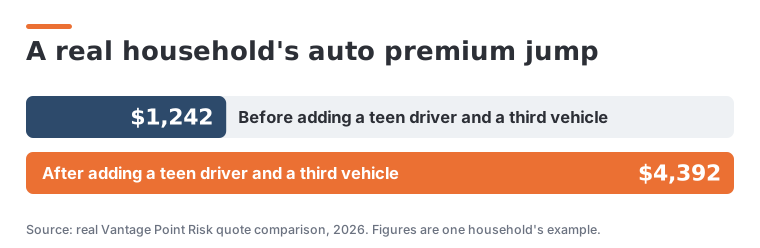
A real household's auto premium before and after adding a teen driver and a third vehicle: $1,242 before, $4,392 after.

What changed for this household

The household already carried auto and home insurance with the same carrier. In one stretch they were adding a newly licensed teen driver and a third vehicle, which took them to three drivers and three vehicles on the auto policy. Nothing else about the coverage was being stripped down. The goal was to keep strong protection and understand the real cost, not to cut corners to make a number look smaller.

The starting point

Before the change, the household’s auto premium was $1,242 a year, which works out to about $103.50 a month. That was the baseline everything else got measured against.

What the existing carrier quoted after the change

With the teen driver and the third vehicle added, the existing carrier quoted $4,392 a year for the auto, or about $366 a month. Broken out by car, the three vehicles came in at $1,401, $1,091, and $1,900.

That’s an increase of $3,150 a year over the prior premium, about $262.50 more a month, and roughly 3.5 times the original number. A jump like that looks alarming, but a driver with no record plus an added vehicle are both large rating changes, and they stacked. The number wasn’t a mistake. It was the honest cost of the new risk with that one carrier.

Then we shopped the increase

The important step wasn’t arguing the increase. It was putting the same three drivers, the same three vehicles, and comparable coverage in front of several carriers to see the real spread. Four carriers quoted the auto, and because the policy terms differed, the chart below shows each one annualized so they can be compared on the same footing.
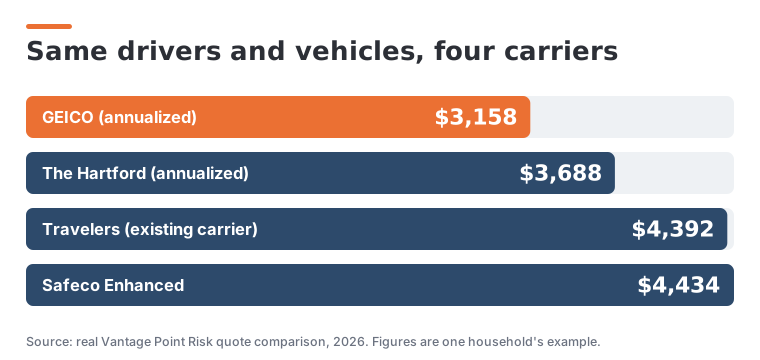
Annualized auto quotes for the same drivers and vehicles: GEICO $3,158, The Hartford $3,688, Travelers $4,392, Safeco Enhanced $4,434.

CarrierQuoted termAs quotedAnnualized
GEICO6 months$1,579$3,158
The Hartford6 months$1,844$3,688
Travelers (existing carrier)12 months$4,392$4,392
Safeco Enhanced12 months$4,434$4,434

The spread between the highest and lowest annualized auto quote was more than $1,200 a year for the same household. That gap is the whole reason to reshop a large change instead of accepting the first renewal number.

Price is only half the comparison

A lower quote is only better if the coverage holds up next to it. Across these quotes the household kept strong liability throughout, with bodily injury limits of $250,000 per person and $500,000 per accident and property damage liability of $100,000. The quotes carried personal injury protection, uninsured and underinsured motorist coverage, comprehensive and collision, rental reimbursement, and roadside assistance, and the replacement auto option included full safety glass. Deductibles and a few sublimits varied by carrier, which is exactly the kind of detail worth reading line by line rather than skimming. For how to do that on your own declarations page, see our guide to comparing auto insurance quotes without getting burned.

The home policy belonged in the conversation

Because the household had home and auto together, the home policy got reviewed at the same time. The current home policy was $1,093 a year. The replacement home quote came in at $1,171 a year, which is $78 more, about $6.50 a month.

On its own, a home quote that costs more looks like the wrong direction. It only makes sense once you put it next to the auto.

Home and auto together changed the answer

Here’s where the package math matters. Staying with the existing carrier meant the new $4,392 auto plus the current $1,093 home, or $5,485 a year. Moving both the auto and the home to one alternative carrier meant $3,688 annualized auto plus the $1,171 home, or $4,859 a year.
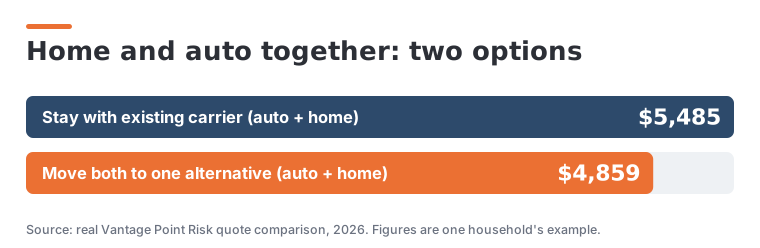
Combined home and auto: staying with the existing carrier $5,485, moving both to one alternative carrier $4,859.

So even though the replacement home policy cost $78 more, moving both lines together saved about $626 a year against staying put. The lowest single auto quote came from one carrier, but the lowest combined household cost came from another once the home was in the picture. That’s why the package gets compared, not just the cheapest line.

Measured from the household’s original starting point, staying with the existing auto and current home after the change would have added $3,150 a year. Moving both lines to one carrier held the increase to about $2,524 a year for comparable coverage. The teen driver and the added vehicle still cost real money. Shopping the change simply kept more of it in the household’s pocket.

What this example is good for

A few things carry over to almost any household facing the same change:

Adding a newly licensed teen driver and another vehicle can multiply an auto premium, and a large increase is normal rather than a sign something is wrong. The carrier you’ve been happy with may not be the best fit once the household changes this much. Comparing several carriers on the same coverage is what reveals the real range, which here was more than $1,200 a year on the auto alone. And when home and auto sit together, the winning answer is the lowest total for the coverage you want, not the single cheapest line.

Bottom line

For this household, the auto premium went from $1,242 to $4,392 a year after a teen driver and a third vehicle were added. Shopping the change across four carriers and reviewing the home alongside it brought the combined home and auto cost down by about $626 a year versus staying put, while keeping strong limits in place. Your numbers will be different, but the process is the same: expect the increase, then shop it properly.

Questions to ask your advisor

Before you accept a renewal after a driver or vehicle change, it helps to ask a few specific things. Ask what’s actually driving the increase and how much of it is the new driver versus the added vehicle. Ask which carriers your agent can compare for your exact drivers and vehicles. Ask how the quotes line up coverage by coverage, not just on price. And if your home is with the same carrier, ask how the combined home and auto package compares, because that total can change the decision.

About this example

The figures here come from a real Vantage Point Risk quote comparison completed in 2026 for one household. Client name, address, vehicle identification numbers, dates of birth, and any policy or account numbers are removed. Carrier names and the real premium and coverage figures are kept so the comparison is useful. Because pricing depends on the specific drivers, vehicles, coverage, state, and carrier, this is an illustration of how the process works rather than a rate to expect on your own policy.

Want guidance first? Compare your coverage. Already know what you need? Get a quote.

What many people don't realize

The part that catches owners off guard

  • These are real quote figures from one household. Client name, address, and identifying details are removed.
  • A teen driver plus another vehicle is one of the largest changes a family auto policy can see, so a big increase is normal, not a mistake.
  • The existing carrier is not automatically the best fit after a change this size. Shopping the market is what showed the real range.
  • The cheapest single auto quote is not the whole answer when the home policy is part of the picture too.
  • Every household, vehicle, driver, and carrier is different. Your numbers will not match these.
The Vantage Point

What we see most often

When a family adds a newly licensed teen and a third car in the same month, the renewal shock is real. The instinct is to assume the carrier made a mistake or is gouging. Usually neither is true. A new driver with no record and an extra vehicle are both large rating changes, and the premium reflects that.

The useful move is not to argue the increase. It is to shop the increase. Put the same drivers, the same vehicles, and the same coverage in front of several carriers and see the spread. In this case the spread was wide, and the winning answer only showed up once the home policy was on the table next to the auto.

A real example

This household already had auto and home with the same carrier. They were adding a newly licensed teen driver and a third vehicle at the same time, which took them to three drivers and three vehicles. We reshopped the auto across four carriers, reviewed the home alongside it, and compared the packages rather than the single lowest auto line. Client identifying details are removed and the figures are the actual quotes.

Details changed to protect privacy. Shared to illustrate, not to promise an outcome.

Free, two-minute check

See where your coverage stands

Answer a few quick questions and get a clear read on your current coverage in about two minutes. We flag what is worth a closer look.

Compare your coverage
When to review

It may be time for a coverage review if:

  • A newly licensed teen driver is about to go on your policy
  • You are adding another vehicle to the household
  • Your renewal jumped after a driver or vehicle change and you have not shopped it
  • Your home and auto are with the same carrier and you have not compared the package in a while
  • You want to keep strong liability limits while controlling the total cost
Compare your coverage Get a quote
Frequently asked

Frequently asked

How much can auto insurance go up when you add a teen driver and another vehicle?
In this real example, the household's annual auto premium went from $1,242 to $4,392 after adding a newly licensed teen driver and a third vehicle. That is an increase of $3,150 a year, or roughly 3.5 times the prior premium. A newly licensed driver with no record plus an added vehicle are both large rating changes, so a jump of this size is not unusual. Your own result depends on the drivers, the vehicles, the coverage, and the carrier.
Why does adding a teen driver raise the premium so much?
A newly licensed driver has no driving history, and younger drivers as a group have more frequent and more severe claims, so carriers rate that risk higher. Adding another vehicle raises the premium again because there is one more car to insure. When both happen at once, the two increases stack.
Should I just stay with my current carrier and pay the higher rate?
Not automatically. In this example the existing carrier quoted $4,392 a year for the auto after the change, while another carrier came in around $3,688 annualized for comparable coverage. The only way to know your real range is to reshop the same drivers, vehicles, and limits across several carriers at once.
Is the cheapest auto quote always the best choice?
No. Coverage limits, deductibles, and how the home policy fits alongside the auto all matter. In this case the lowest single auto quote was not the same carrier that produced the lowest combined home and auto package. Compare coverage and the total household cost, not just one line.
Does moving both home and auto to one carrier actually save money?
Sometimes, and it is worth checking rather than assuming. Here the replacement home quote was actually $78 a year higher than the current home policy, yet moving both the auto and the home to one carrier still produced about $626 a year in total savings versus keeping the existing auto quote and current home. The package math is what decided it.
Will my numbers look like this example?
Probably not exactly. These are one household's real quotes for specific drivers, vehicles, and coverage in 2026. Pricing varies by carrier, state, vehicle, driver history, credit where allowed, coverage limits, and deductibles. Treat this as an illustration of how the process works, not a rate you should expect.
RS
Written and reviewed by

Richard Sweet

Founder and Principal Advisor, Vantage Point Risk

Richard Sweet runs Vantage Point Risk, an independent insurance and risk advisory for property owners, real estate investors, business owners, and families. He works with investors every week on the coverage decisions that decide how a claim actually turns out, and writes the Learning Center to put those decisions in plain language.

Reviewed for accuracy by Richard Sweet. Last updated July 9, 2026.

Richard also writes The Vantage Point, notes on building a better business.

These are real quote figures from a single household comparison in 2026, with client identifying details removed. Coverage and pricing vary by insurance company, policy form, state, underwriting eligibility, driver history, endorsements, limits, and deductibles. This is general educational information, not a quote, a guarantee of coverage or savings, or insurance advice. Your own coverage and cost depend on your specific policy and carrier.

Compare your coverage

It's not a quote. It's a real review.

Answer a few quick questions and get a clear read in about two minutes. We will flag what is worth a closer look, and you can hand us your current policy if you want us to dig in. No pressure, no obligation.

We review your current coverage for gaps and overlaps
We compare the market to see if you are overpaying
We tell you what is actually worth changing, and what is not
You get clear answers, even when you are already covered well