
Three homeowners quotes on the same house came back within about $42 a year of each other. If you only looked at the price, you’d flip a coin. Look at the actual policies and they’re built very differently. This is a real comparison on one Albany, Oregon home, with the client’s name, address, and identifying details removed and the actual quote figures kept in.
The home we quoted
The property was a small single-story ranch in Albany, built in 1956, about 1,232 square feet, with a crawl space, an attached garage, fiber cement siding, and an architectural asphalt shingle roof that had just been replaced in 2025. A straightforward, well-kept home. The kind of house where you’d expect three carriers to land in the same place. They did on price. They didn’t on coverage.
On price, it was almost a tie
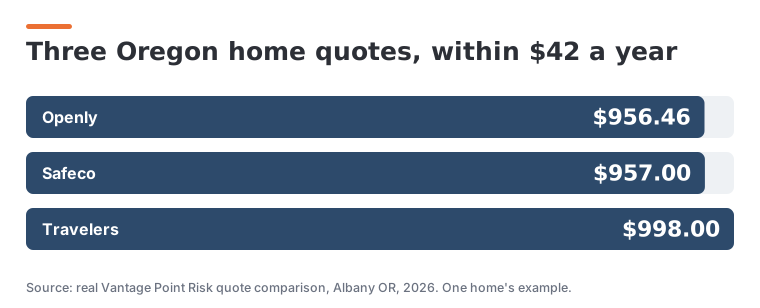
Openly came in at $956.46 a year. Safeco was $957.00 paid in full, a difference of 54 cents. Travelers was $998.00. From the lowest to the highest quote was about $42 a year, or roughly three dollars and fifty cents a month. On premium alone, there’s almost nothing to decide here.
So the coverage is where the decision actually gets made.
The finding that surprised us most
We asked all three carriers to insure the same 1,232 square foot house. They estimated wildly different amounts to rebuild it.
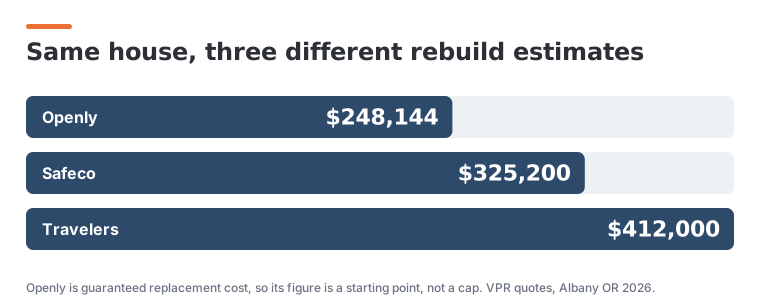
Openly’s reconstruction estimate was about $248,144. Safeco’s was $325,200. Travelers built the quote around $412,000, with up to roughly $515,000 available through its extension. Same house. The rebuild figures ranged by more than $160,000.
Insurers use different reconstruction models and assumptions, so a spread like this is normal. It also matters. The rebuild estimate drives the dwelling limit, and that limit has to be big enough to actually rebuild your home after a total loss.
There’s an important nuance on the lowest figure. Openly’s quote was written on guaranteed replacement cost. That doesn’t cap the rebuild at a fixed dollar amount the way a stated limit does, subject to the policy terms. So its $248,144 is a starting estimate, not a ceiling. Travelers and Safeco offered a 25 percent extension over their stated limits instead. Those are two different promises, and knowing which one you have matters. Our guide to extended versus guaranteed replacement cost walks through the difference.
Same price range, different coverage
Away from the dwelling, the three policies kept making different choices. None of these is right or wrong on its own. They’re tradeoffs, and the chart lays them side by side.
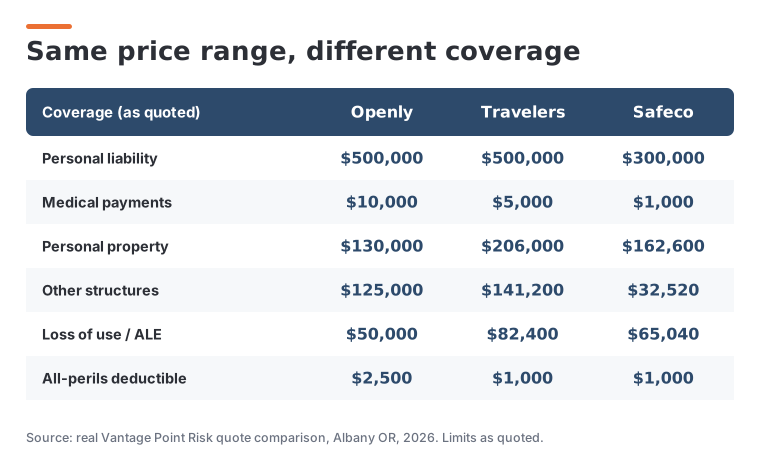
A few of these differences are the kind that show up at claim time. Personal liability ranged from $300,000 to $500,000, which is the coverage that protects you if someone is hurt and you’re found responsible. Other structures, the coverage for a detached garage, fence, or shed, ranged from about $32,500 to over $141,000. Loss of use, the money that pays for somewhere to live while your home is repaired, ranged from $50,000 to $82,400. Personal property, the coverage for your belongings, actually ran opposite to the dwelling estimates, with the lowest-priced quote carrying the lowest contents limit.
Deductibles are part of the price
The premiums looked close, but the deductibles didn’t. Openly carried a $2,500 deductible on all perils. Travelers was $1,000 on most perils with a $2,500 wind and hail deductible. Safeco was $1,000 across the board.
That gap matters. A higher deductible usually buys a lower premium, so two policies can look nearly identical on the annual number while asking very different amounts out of your pocket after a claim. On this home the difference between a $1,000 and a $2,500 deductible is $1,500 you’d absorb before coverage starts. That’s worth weighing against a premium difference measured in cents.
Water coverage was defined differently
Water damage is one of the most common home claims, and the three quotes handled it differently. Travelers and Safeco listed clear dollar limits: both showed $50,000 of water backup coverage, with additional seepage coverage of $20,000 and $25,000. Openly listed water backup as included with full coverage but didn’t show a stated dollar limit in the quote summary. When a coverage says “included” without a number next to it, that’s a question worth asking before you buy, not after a claim.
What this comparison actually shows
Pull back from the individual numbers and a few lessons hold up well beyond this one house.
Price alone didn’t tell the story. Three quotes within about $42 a year bought clearly different protection. The lowest premium wasn’t the weakest policy, and it wasn’t automatically the strongest either. It carried guaranteed replacement cost and the highest liability, and also the highest deductible and the lowest contents limit. Every policy here was a set of tradeoffs.
Reconstruction estimates aren’t standardized, so the dwelling limit is worth checking against what it would truly cost to rebuild your home. Guaranteed and extended replacement cost are different promises. Deductibles can quietly offset a premium difference and belong in the comparison. And limits like liability, other structures, and loss of use should be reviewed rather than assumed, because they move more than people expect from one carrier to the next.
Bottom line
On this Albany home, the cheapest quote and the most expensive quote were about $42 a year apart, and the policies behind them weren’t close. That’s the case for comparing coverage line by line instead of sorting by premium. The price is often the easy part. What each policy actually does for you is the part worth your attention. Our full method for comparing homeowners insurance quotes walks through it coverage by coverage.
Questions to ask your advisor
Before you pick a home quote, ask a few specific things. Ask what rebuild estimate the dwelling limit is based on and whether it reflects today’s construction costs. Ask whether the policy is guaranteed or extended replacement cost. Ask how the deductibles compare and what you’d actually pay out of pocket after a common claim. And ask how the liability, other structures, and loss of use limits line up against the other quotes, because those are the numbers that move the most.
About this example
The figures here come from a real Vantage Point Risk quote comparison completed in 2026 for one home in Albany, Oregon. Client name, address, and any policy or account numbers are removed. Carrier names and the real premium and coverage figures are kept so the comparison is useful, not to rank one insurer over another. Because pricing and coverage depend on the specific home, location, and carrier, this is an illustration of how to compare rather than a rate to expect on your own policy.
Want guidance first? Compare your coverage. Already know what you need? Get a quote.